
How to Know If Your Helmet Fits Correctly
SHOEI Cheek Pad Sizing:
The Cheek Pads Are the Most Important Part of Helmet Fit
If your SHOEI feels comfortable the moment you put it on, that's not necessarily a good sign. A new helmet should feel snug, noticeably so, with the cheek pads pressing firmly against your face. What it shouldn't do is hurt, dig in at a single pressure point, or feel loose enough to rock on your head.
Getting cheek pad sizing right matters more than most riders realise. Too loose and the helmet can rotate during an impact, reducing protection precisely when you need it. Too tight in the wrong way and you're dealing with pressure headaches on every long ride. And because the foam compresses over months of use, what feels correct today will feel different in six months.
So here's exactly how SHOEI cheek pads work, how to know whether yours are right, and what to do if they aren't.


How SHOEI Cheek Pads Are Sized
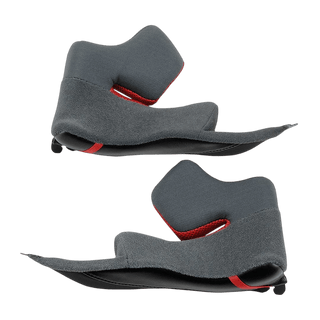
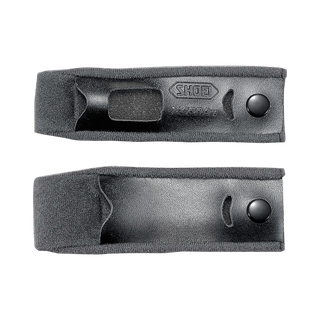
SHOEI cheek pads are measured by thickness in millimetres, and the number is stamped on the back of every pad. Most current SHOEI models offer four standard thicknesses: 31mm, 35mm, 39mm, and 43mm.
The logic works like this: a thicker pad takes up more interior volume, which creates a tighter fit against your face. A thinner pad gives more room. So if your helmet feels too loose on the cheeks, you need to go up, to a thicker pad. If it's too tight at the cheeks, you go down to a thinner one.
This catches riders out constantly. You're not changing the shell size. You're adjusting the volume of the interior by swapping the pad.
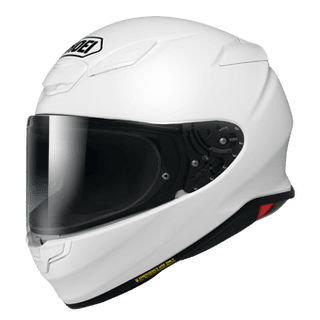
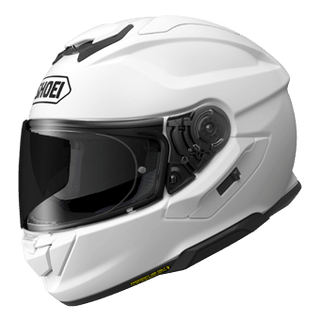
One thing that makes SHOEI straightforward here: cheek pads are universal within each model. A 35mm NXR2 cheek pad fits every shell size of the NXR2, XS through XXL. Same applies to the GT-Air 3, Neotec 3, X-SPR Pro, and the rest of the current range. You only need to know the model name and the thickness you want. The original size is printed on the back of the pad that's already in your helmet, worth checking before you order anything.
What a Correct Fit Actually Feels Like
SHOEI's own guidance is the clearest way to describe it. When the helmet is on and the chinstrap is fastened, you should feel the urge to drag your teeth along the inside of your cheeks when you open and close your mouth. The pads should be in firm, consistent contact with your face, not pinching at one point, but making even contact across the cheek and jaw. Run through this checklist once the helmet is on:
- Even pressure on both sides: if one cheek feels significantly more compressed than the other, the helmet isn't sitting centred on your head, or the pads have shifted
- You can't easily slide two fingers in at the temple: if you can, the shell is too large, which is a different problem to cheek pad thickness
- The helmet moves your skin, not your head: grab both sides and try to rock it. You should feel the skin of your face pulling with the helmet. If it moves freely, it's too large
- No sharp pressure point after 20–30 minutes: general snugness across both cheeks is correct. A single hot spot on the temple, jaw hinge, or forehead is not
New Helmet? The First Few Rides Will Feel Tight
Brand new SHOEI cheek pads are firmer than they will be after a few rides. That's intentional, the foam is designed to compress by around 15–20% during the first 15 to 20 hours of use, conforming progressively to the shape of your face.
What riders call the "chipmunk" feeling, cheeks pushed inward, face slightly squished, is a sign of correct initial sizing. It will ease. A helmet that feels comfortable the moment you first try it on is almost certainly too large, and will feel loose by the time it's broken in.
The distinction to keep in mind: general tightness that's firm but not painful is correct fit. A specific, sharp pressure on a bony area, the temple, the hinge of your jaw, directly above the eyebrow, is a shape mismatch that won't improve with break-in. If that's what you're feeling, try a thinner cheek pad first. If the issue is still there, it's likely a head shape question rather than a sizing question, and that's where a Personal Fitting System appointment becomes useful.

How to Change SHOEI Cheek Pads
No tools needed. SHOEI cheek pads attach via snap buttons and a fastening strip on the interior of the helmet.
- Hold the helmet upside down with the chin bar facing up
- Work the leading edge of the pad away from the chin bar first, releasing each snap one at a time, work from the edges inward, not from the centre
- Peel the pad away from the fastening strip at the crown
- Repeat on the other side
- To fit the new pads, align the fastening strip at the crown first, press the pad into position, then click each snap home, you'll feel and hear each one seat
The size is stamped on the back of each pad. Check it before ordering so you know where you're starting from.
Several SHOEI models also offer a Comfort Cheek Pad Set, an additional 2mm foam insert that clips onto your existing pad rather than replacing it entirely. This is useful if you want to fine-tune the fit by 2mm without committing to the next full thickness increment. The NXR2 Comfort Cheek Pad Set (article 18.03.268.0) is one example; similar inserts exist for the Neotec 3 and other models.
When to Replace Worn Cheek Pads
Cheek pad foam compresses permanently over time and eventually stops providing consistent contact. The practical signs that it's time to replace them:
- The helmet feels noticeably looser than it did when new
- The padding surface is flattened, matted, or misshapen
- The pads can't be cleaned properly, sweat and oils build up in foam over years of use, and past a point that can't be remedied by washing
- The ERS tabs are fraying or damaged
- The helmet is five or more years old
Fresh cheek pads also make a difference to wind noise. Compressed foam transmits more vibration and sound than correctly-profiled padding, if the helmet has started feeling louder inside, the pads are worth checking before you blame anything else.
Still Not Getting a Comfortable Fit?
If you've adjusted the cheek pad thickness and still can't get consistent comfort on longer rides, the issue is probably head shape rather than volume. SHOEI helmets are engineered around an intermediate oval head shape, which suits most riders, but head shapes vary, and a technically correct size can still create pressure points in the wrong places for a particular skull geometry.
The SHOEI Personal Fitting System (PFS), available at SHOEI Gallery Birmingham and a small number of certified UK dealers, uses a computer-guided process to take detailed measurements and customise the internal padding of your helmet to your specific head shape. It addresses exactly the kind of persistent fit issues that pad size changes alone can't resolve.
Book your PFS appointment online | Browse helmets at shoeiuk.com | Visit us at 4 College Street, Birmingham B31 2US